
Most people think growth happens the moment they learn something new. A deal goes sideways. A client slips through the cracks. A deadline gets missed. They feel the sting of it, they say 'I know better now' — and they move on.
But here's the problem: knowing better and doing better are not the same thing. Not even close.
I've spent over a decade in high-stakes real estate, closing more than $500 million in transactions across New York City and South Florida. And the single most important thing I've learned — about performance, about teams, about building something that lasts — is this:
|
It's not enough to learn the lesson. You have to turn the lesson into a system. |
Why 'I'll Remember Next Time' Is a Lie
The moment a deal gets complicated, the moment your calendar fills up, the moment three things are happening at once — whatever you promised yourself you'd 'remember next time' disappears. Not because you're careless. Because you're human, and human memory fails under pressure.
That's not a character flaw. That's just how performance works at a high level. The professionals who consistently outperform aren't necessarily smarter or more talented. They've simply stopped relying on memory and started relying on structure.
A checklist doesn't forget. A workflow doesn't have a bad day. A system runs whether you're at the top of your game or grinding through a difficult week.
The Difference Between Awareness and a System
Awareness is the first step. It's valuable. But awareness without structure is just regret waiting to happen again.
Here's what the progression actually looks like:
|
Level |
What It Looks Like |
What It Produces |
|
Awareness |
"I know I should do this" |
Good intentions |
|
Knowledge |
"I understand why it matters" |
Better decisions — sometimes |
|
System |
"This is built into my process" |
Consistent results, always |
Most people live at level one or two their entire careers. They're aware. They're knowledgeable. But they haven't locked anything into a repeatable structure — so every busy week, every difficult stretch, looks like starting from scratch.

A Real Example From My Team
I had this conversation recently with one of my agents — sharp, hardworking, great instincts. We were reviewing a deal together and a detail had slipped. Nothing catastrophic, but the kind of miss that costs time, trust, and momentum.
When I asked what happened, the answer was honest: things got busy, the step got skipped, they thought they'd catch it later. Sound familiar?
Here's what I told them — and what I want to share with you:
|
"Anybody can say, 'Now I know.' But if the lesson doesn't go into a checklist, a process, or a workflow, then once life gets busy, it gets skipped again. That's how details get missed." |
I didn't want awareness from them. I wanted structure. I sent them home with one assignment: use the tools available to you, build your own checklist for deals, listings, and client management based on everything you've learned so far. Bring it back to me and we'll sharpen it together.
That's how you grow fast. Not by trying harder every single day with no framework underneath you. By taking each lesson — every mistake, every miss, every insight — and locking it into something repeatable.
How to Turn Any Lesson Into a System
This applies whether you're in real estate, finance, operations, sales, or running your own business. The process is the same.
Step 1: Name the lesson clearly
Don't just feel it — articulate it. Write it down in one sentence. "When I don't confirm the appointment 24 hours in advance, clients don't show." That's a lesson. Vague discomfort is not.
Step 2: Identify where in your workflow it belongs
Every lesson has a home — a specific moment in your process where the failure happened. Find that moment. Is it at intake? Before a showing? At contract review? At closing? Pin the lesson to the exact stage it belongs.
Step 3: Write the trigger and the action
Systems run on triggers. "When X happens, I do Y." When I open a new deal, I send the intro email. When I schedule a showing, I confirm 24 hours out. When a contract is signed, I start the checklist. Simple, binary, repeatable.
Step 4: Build it into a tool you already use
The best system is the one you'll actually use. If you live in your phone, it goes in your notes app. If you live in email, it's a template. If you manage deals in a CRM, it's a task flow. Don't build a system that requires a new habit on top of the lesson — attach it to behavior you already have.
Step 5: Review it when you're calm, not when you're under pressure
Systems need maintenance. Set a weekly or monthly review — not during a crisis, but in a quiet moment — to ask: did I follow the process this week? Where did I deviate? What needs to be updated? That review loop is what keeps the system alive.
What Professionals Actually Do
The highest performers I've worked with — in real estate, in finance, in business — share one trait that isn't talked about enough: they are obsessively systematic about the unglamorous stuff.
The follow-up email. The pre-closing checklist. The weekly pipeline review. The client touch cadence. None of it is exciting. All of it is what separates people who consistently close from people who occasionally close.
Trying harder every day with no structure underneath you is exhausting and unsustainable. Building systems is how you create leverage — so that your best practices run automatically, even on your hardest days.
|
That's what professionals do. They don't just learn the lesson. They engineer the lesson into the process. |
Where to Start Today
You don't need a perfect system. You need a first draft of one. Here's a simple starting point:
• Write down the last three mistakes or misses in your work — be honest with yourself
• For each one, ask: where in my process did this break down?
• Write one rule or checkpoint that would have caught it
• Drop those three rules into a checklist — even a basic one in your notes app
• Use it on your next deal, project, or client interaction
That's it. That's the start. It doesn't need to be beautiful. It needs to be used.
From there, you iterate. You refine. You add to it as new lessons come. Over time, what you've built isn't just a checklist — it's your operating system. The thing that runs when you're tired, when you're overwhelmed, when the stakes are highest.
And that is exactly what separates people who grow fast from people who stay stuck repeating the same mistakes in a different year.
About Nile Lundgren
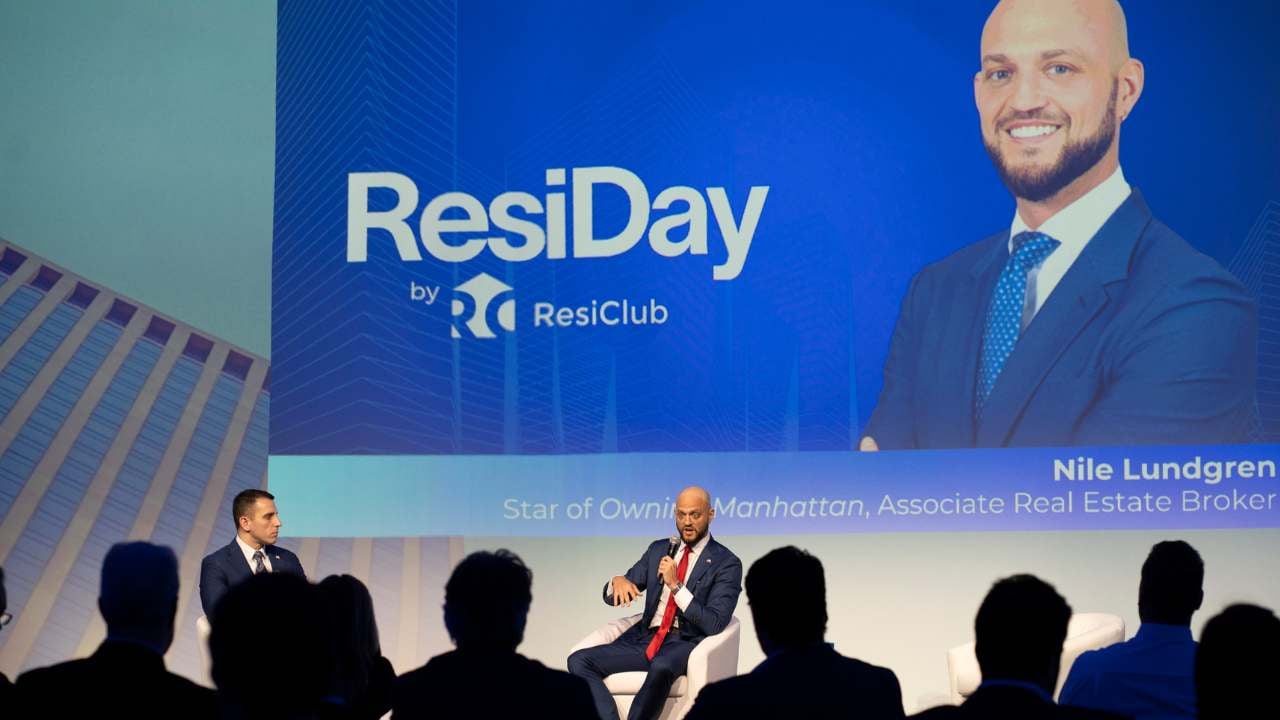
Nile Lundgren is the founder of The Lundgren Team at SERHANT., with over $500 million in career sales across New York City and South Florida. He is a cast member on Netflix's Owning Manhattan, a Fox News contributor, an adjunct professor at Baruch College, and a nationally recognized speaker on real estate and professional performance.
Want to build a stronger system for your business? Reach out to The Lundgren Team.