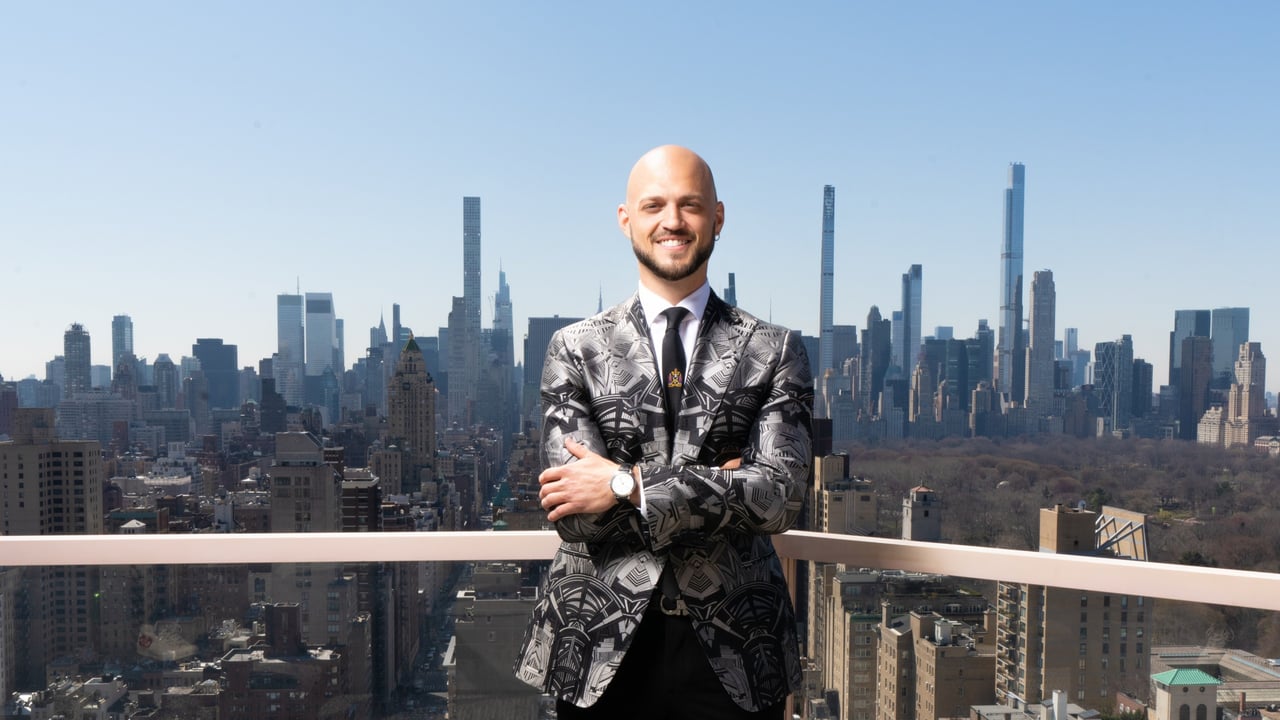
Yes. Hire your own Manhattan new development condo agent, because the sponsor's sales team works for the developer, not for you. Your own agent works for you. I'm Nile Lundgren, founder of the Lundgren Team at SERHANT., with $550M in sales, and I have sold new development from the sponsor side, so I know what to ask.
If you are buying new development in Manhattan and want someone on your side of the table, talk to my team at SERHANT.
Picture the sales gallery. The model kitchen is perfect, the light is perfect, and the person walking you through it is warm, sharp and genuinely helpful. All of that can be true. That person still works for the developer.
That is not a knock on anyone. It is how the deal is built. The question is who is in the room for you.
What does a Manhattan new development condo agent do for a buyer?
A Manhattan new development condo agent represents you, the buyer, in a deal where the seller is the developer. The job is to make sure the price, the apartment and every promise hold up on paper.
Here is the work, in the order it matters:
Reading the offering plan with your attorney. Your attorney handles the legal review. My job is to flag what matters for the deal: what the plan actually commits the sponsor to deliver, and what it leaves out.
Comparing lines and floors. In a new building, the same layout can show up on many floors, and different lines face different ways. I walk buyers through the trade-offs between one apartment and the next, inside the same building, before anyone talks price.
Negotiating with the sponsor. A sponsor is selling a whole building, not one apartment. Your agent's job is to find out what is actually on the table in that building and ask for it.
Getting promises in writing. If something was said in the sales gallery and it is not in the offering plan or the purchase agreement, it needs to be in writing before you sign. More on that below.
That is what a buyer's agent for new construction is for. I work the buy side for clients and the sponsor side for developers, and you can see how I break that down on my services page.
Why does sponsor-side experience matter when you buy?
Because you negotiate differently when you have sat in the other chair. An agent who has sold out a building knows how a sponsor team thinks about pricing, timing and the next contract.
I played linebacker in college. You study the other team's film all week so nothing surprises you on game day. Sponsor-side work is that film.
Lundgren Team sold out The Huxley, 71 units, $54.7M.
The Armstrong, the boutique Harlem condominium just off St. Nicholas Park, is fully sold as well.
That work was for developers. Developers saw me on Netflix's Owning Manhattan and selected me to work on their projects. When I represent a buyer, I bring the same playbook to the other side of the table. I know which questions a sponsor team expects to answer, which documents to pull, and which promises belong in a rider instead of a conversation.
The friendliest sales gallery in Manhattan is still the other side of your negotiation. Treat it with respect, and bring your own team.
What should you read before you sign for a new development condo?
The offering plan, all of it, with your attorney. That is the New York Attorney General's advice, not just mine.
The plan is the offer. Under New York's regulation for condominium offering plans, the plan's cover has to state that New York law requires the sponsor to disclose all material information in the plan and to file it with the New York State Department of Law before selling or offering to sell any unit. The same cover states that filing does not mean the Department or any other government agency has approved the offering. Source: 13 NYCRR 20.3, New York Attorney General
Read every page, then talk to a lawyer. The Attorney General highly recommends that a buyer read the entire offering plan and consult an attorney before signing a purchase agreement. Source: New York Attorney General, Before You Buy a Co-op or Condo
Put promises in writing. The same guidance says that if the sponsor or its representatives made any material representation that is not clearly set out in the purchase agreement or the offering plan, you should get it in writing, for example in a rider to the purchase agreement.
Read the Description of Property. The Attorney General also tells buyers to read that section of the plan to see what the sponsor is obligated to deliver, and not to rely on advertising brochures or verbal statements.
Look the building up yourself. The Attorney General keeps an Offering Plan Database you can search by property name, address, file number, or sponsor or principal name. Some filings have the plan and its amendments posted for download.
None of this replaces your attorney. It tells you what to ask your attorney about.
When you are ready to look at buildings, you can browse New York new development on my site and bring your questions to me.
Do you have to sign a buyer agreement first, and what does it cost?
If you tour with an agent, expect to sign a written buyer agreement first. What you pay is whatever that agreement says, and it is negotiable.
The National Association of REALTORS says written buyer agreements became a requirement for many real estate professionals on August 17, 2024, and that you will be asked to sign one before touring a home with your agent, in person or virtually. Visiting an open house on your own does not require one. Source: NAR, Consumer Guide: Written Buyer Agreements
On cost, the same guide is clear: compensation between you and your agent is negotiable and not set by law, and the agreement has to define it clearly, not as an open-ended number or a range. You can also request that the seller or the seller's agent pay your agent's compensation. I'm not going to quote you a percentage here, because the right answer is the one written in your agreement.
I walk through what to look for in these agreements in Do I have to sign a buyer broker agreement to see a house? For the closing cost side of a Manhattan purchase, read my breakdown of the NYC mansion tax, and confirm the numbers for your deal with your attorney.
What is the Manhattan market like for buyers right now?
My view: it is a market for prepared buyers. Here is how I put it in October: "In Manhattan, inventory is scarce." It has "definitely been challenging for buyers." And: "I feel like the market is softer, but you have to get out there and make a lot of offers."
Manhattan new development is no exception. The buyers who do well show up with the plan read, the attorney lined up, the numbers known, and an agent who has worked the other side. Preparation Creates Freedom. When the right apartment shows up, you are ready to move and you already know what to ask for. To see what I am representing right now, see my current listings.
FAQ
Does the sponsor's sales team represent me?
No. A sponsor's sales team works for the developer. Your own agent works for you.
Can I bring my own agent to a sponsor sales office?
In general, yes, you can have your own agent represent you. Have your agent contact the sales team before your first visit, so it is clear from day one who represents you.
Where can I read a building's offering plan?
Ask the sponsor for the plan and its amendments, and search the New York Attorney General's Offering Plan Database by property name, address, file number or sponsor. Then read it with your attorney.
How do I contact Nile Lundgren about buying a Manhattan new development condo?
Call (917) 453-4526 or use the contact page at nilelundgren.com/contact.
Nile Lundgren, founder of the Lundgren Team at SERHANT., with $550M in sales and nearly two decades of experience. Licensed in New York and Florida. RealTrends Top 1 percent. Cast member of Netflix's Owning Manhattan.
Call (917) 453-4526 or contact the Lundgren Team at SERHANT. at https://nilelundgren.com/contact