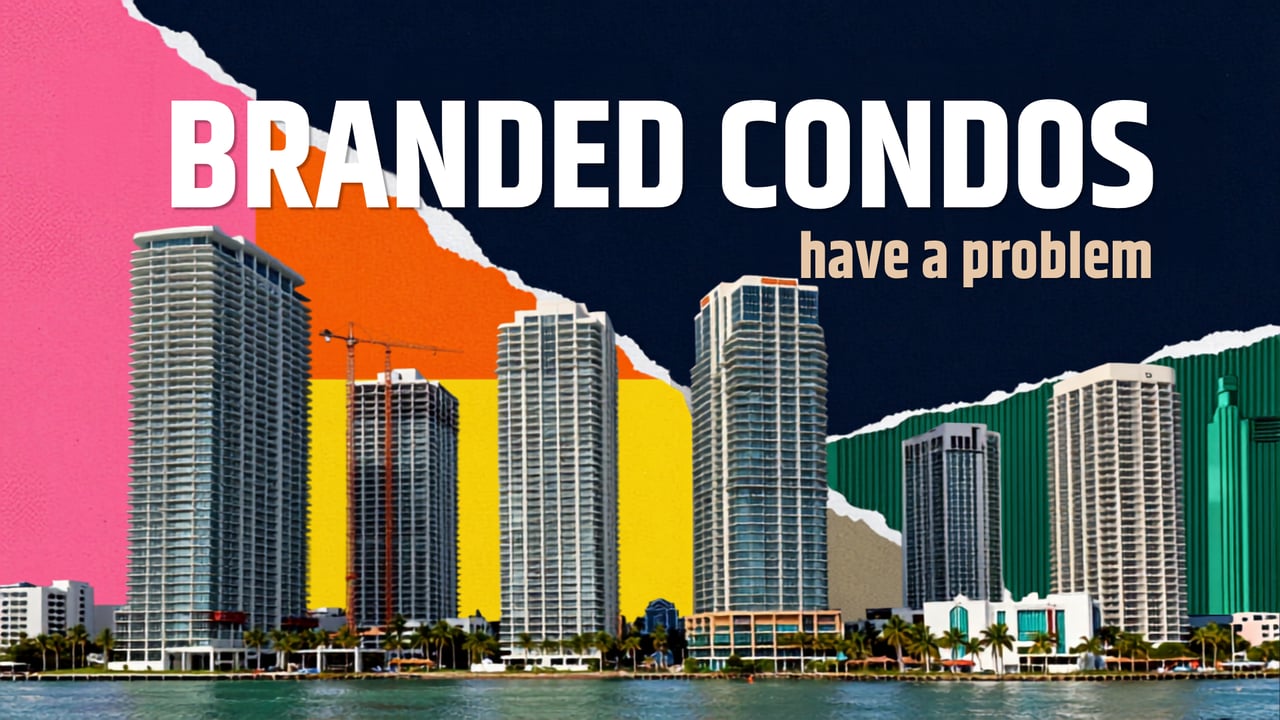
Miami's branded condo boom is real.
So are the cracks.
In the same week Partners Group announced plans for a $220 million Breitling-branded tower in Brickell, several luxury condo associations across South Florida were already in active litigation over alleged construction defects, including cracked concrete, leaks, elevator issues, and water intrusion.
The lesson is simple.
The brand may sell the dream.
The building still has to perform.
The Lawsuits Stacking Up in 2026
Several high-profile luxury branded projects have faced legal action this year.
At Aston Martin Residences, the condo association alleged construction defects including improperly sloped balconies, cracks, corrosion, and leaks throughout parts of the tower. The building has also faced separate legal claims tied to alleged missing amenities and association funds.
At Missoni Baia, owners sued OKO Group and nearly two dozen firms tied to the project, alleging 76 construction defects that included cracked slabs, water intrusion, hot-water problems, fire system defects, pool plumbing leaks, and non-functioning elevators.
At Amrit Ocean Resort, the association sued the developer and construction team in 2026 over alleged construction defects after earlier disputes tied to turnover and building documentation.
These are not small buildings.
They represent hundreds of luxury units across one of the most watched condo markets in the country.
Why This Keeps Happening
South Florida has become one of the branded residence capitals of the world.
Car brands. Fashion houses. Hospitality groups. Watchmakers. Lifestyle companies.
Everyone wants their name on a Miami tower.
But a famous logo does not change the fundamentals of construction.
The developer still matters.
The general contractor still matters.
The subcontractors still matter.
The quality control process still matters.
When a project is sold through the power of branding but delivered through weak execution, the buyer absorbs the risk.
The brand does not fix the balcony.
The brand does not repair the elevator.
The brand does not stop the leak.
What Buyers Need to Know Before Signing
The brand is marketing.
It is not due diligence.
Before buying into a Miami branded luxury condo in 2026, buyers need to investigate the people and systems behind the building.
Start with the developer's track record. Not the brand's reputation. The developer's actual delivery history.
Look at what else they have built.
Ask how those buildings performed after turnover.
Speak to residents when possible.
Then study the general contractor. In many cases, the contractor's history is more important than the name on the sales gallery wall.
Buyers should also review any Chapter 558 history. In Florida, Chapter 558 creates a pre-suit notice process for construction defect claims. If a building has entered that process, buyers need to understand what was alleged, what was resolved, and what remains open.
The contract matters just as much.
Preconstruction contracts in Miami often favor developers. Buyers need to understand delivery timelines, delay provisions, deposits, punch-list obligations, association turnover, and what legal remedies actually exist if the finished product does not match the sales pitch.
The Demand Is Still There
This is not a warning to stay out of Miami.
The fundamentals remain strong.
Cash buyers continue to represent a major share of Miami-Dade condo closings. High-net-worth migration from New York, California, Latin America, and Europe continues to support demand. Institutional capital is still betting on the branded condo category.
The new Breitling-branded B Residences tower in Brickell is a clear example. Partners Group announced plans to invest approximately $220 million into the project, with construction expected to begin in late 2028 and completion targeted for 2031.
That is serious capital.
But serious capital does not eliminate buyer responsibility.
It raises the standard for diligence.
The Post-Surfside Divide
The 2021 Surfside collapse changed Florida condo law permanently.
Buildings now face increased scrutiny around inspections, reserves, and structural integrity.
That creates a clear dividing line between older projects, recently delivered projects, and the next generation of towers being designed under a different regulatory environment.
For buyers looking at resale in a recently delivered branded tower, the questions are direct.
Ask for the Structural Integrity Reserve Study.
Ask whether the association has issued any Chapter 558 notices.
Ask whether there is active litigation.
Ask what defects, if any, have been alleged.
Ask whether reserves are properly funded.
Then hire your own professionals.
Do not outsource judgment to the brand.
The Bottom Line
Miami's branded condo market is not dead.
It is maturing.
The first wave was about the name.
The next wave will be about execution.
Buyers are smarter. Inspectors are stricter. Condo boards are more willing to litigate. Developers are under more pressure to deliver what they sold.
The opportunity in Miami remains real.
But the era where a luxury logo was enough is over.
Know the developer.
Know the contractor.
Know the building.
Know what you're signing.
Want to build a sharper real estate business? Explore Lundgren365 Coaching with Nile Lundgren for systems, follow up, positioning, and execution that actually move deals.
Thinking about buying, selling, investing, or making a smarter real estate move? Contact Nile Lundgren and The Lundgren Team to start the conversation.