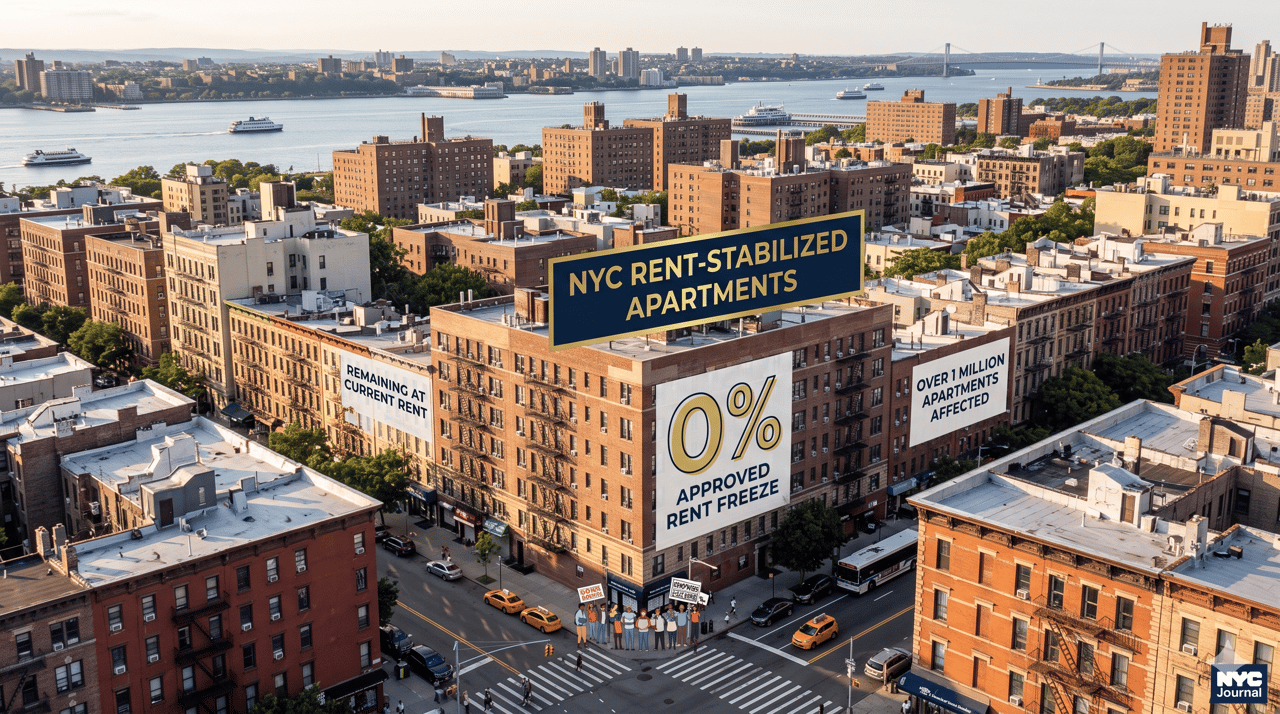
New York City's Rent Guidelines Board has voted to freeze rents for rent-stabilized apartments.
In a 7-1 vote, the board approved 0% increases for both one-year and two-year rent-stabilized leases, making this the first time New York City has approved a freeze for two-year leases.
The decision fulfills one of Mayor Zohran Mamdani's signature campaign promises and represents one of the most significant policy changes affecting New York's rent-stabilized housing stock in recent years.
What the Rent Freeze Means
The vote applies specifically to rent-stabilized apartments throughout New York City.
For qualifying tenants renewing one- or two-year leases, rents will remain unchanged under the new guidelines.
The decision does not apply to market-rate apartments or condominiums.
Millions of New Yorkers live in rent-stabilized housing, making the Rent Guidelines Board's annual vote one of the most closely watched events in the city's housing market.
A Historic Decision
While one-year freezes have occurred before, a freeze on two-year leases has never previously been approved.
The vote followed the resignation of Rent Guidelines Board member Christina Smyth, who criticized the process and suggested the board had become more political than data-driven.
The final vote passed 7-1.
Landlords Raise Concerns
The decision immediately drew criticism from landlord organizations.
Many owners argue that operating costs—including insurance, labor, maintenance, utilities, and property taxes—continue to rise despite frozen rental income.
Industry groups have also raised concerns about the long-term financial health of older rent-stabilized buildings, warning that reduced revenue could impact future investment and maintenance.
Several organizations have indicated legal challenges to the decision are likely.
What This Means for New York's Housing Market
The rent freeze highlights the ongoing tension between affordability and housing economics.
For tenants, the decision provides immediate relief by eliminating rent increases on qualifying lease renewals.
For property owners, it creates additional pressure as operating expenses continue to increase while regulated rental income remains flat.
How the policy affects building investment, maintenance, and future housing supply will likely become a major topic of discussion over the coming months.
Looking Ahead
The Rent Guidelines Board's vote represents one of the most consequential housing decisions of 2026.
While the freeze is expected to benefit rent-stabilized tenants in the near term, questions remain about its long-term impact on New York City's aging housing stock and the economics of owning regulated residential buildings.
With legal challenges already being discussed, the conversation surrounding rent stabilization is far from over.
Want to build a sharper real estate business? Explore Lundgren365 Coaching with Nile Lundgren for systems, follow-up, positioning, and execution that actually move deals.
Thinking about buying, selling, investing, or making a smarter real estate move? Contact Nile Lundgren and The Lundgren Team to start the conversation.