As 2025 came to a close, New York City’s outer-borough residential markets sent a consistent signal: demand remains intact, inventory remains tight, and pricing power continues to concentrate around well-positioned condominiums and new development inventory.
Data from SERHANT.’s Q4 2025 Brooklyn Resale Market Report, Brooklyn New Development Market Report, and Long Island City Condo Market Report collectively point to a housing landscape shaped less by hesitation and more by constrained supply, particularly in design-forward, full-service buildings.
Brooklyn Resale: Demand Holds Despite Limited Choice
Brooklyn’s resale market closed the fourth quarter with 2,325 closed sales, marking a 5.3 percent increase year over year despite elevated borrowing costs and declining listing activity. Median prices held firm, while average price per square foot climbed 3.3 percent year over year, reflecting sustained buyer willingness to transact when quality inventory becomes available.
Inventory remains the defining constraint. Active listings declined 1.4 percent year over year and dropped sharply quarter over quarter, while new listings fell more than 13 percent annually. This compression has limited buyer choice and reinforced price stability, particularly in North and Northwest Brooklyn, where price per square foot continues to command a premium.
Luxury resale activity showed resilience. Sales above $2 million rose 36 percent year over year, underscoring continued appetite for high-end Brooklyn properties even as broader transaction volume softened seasonally.
Brooklyn New Development: Fewer Launches, Firmer Pricing
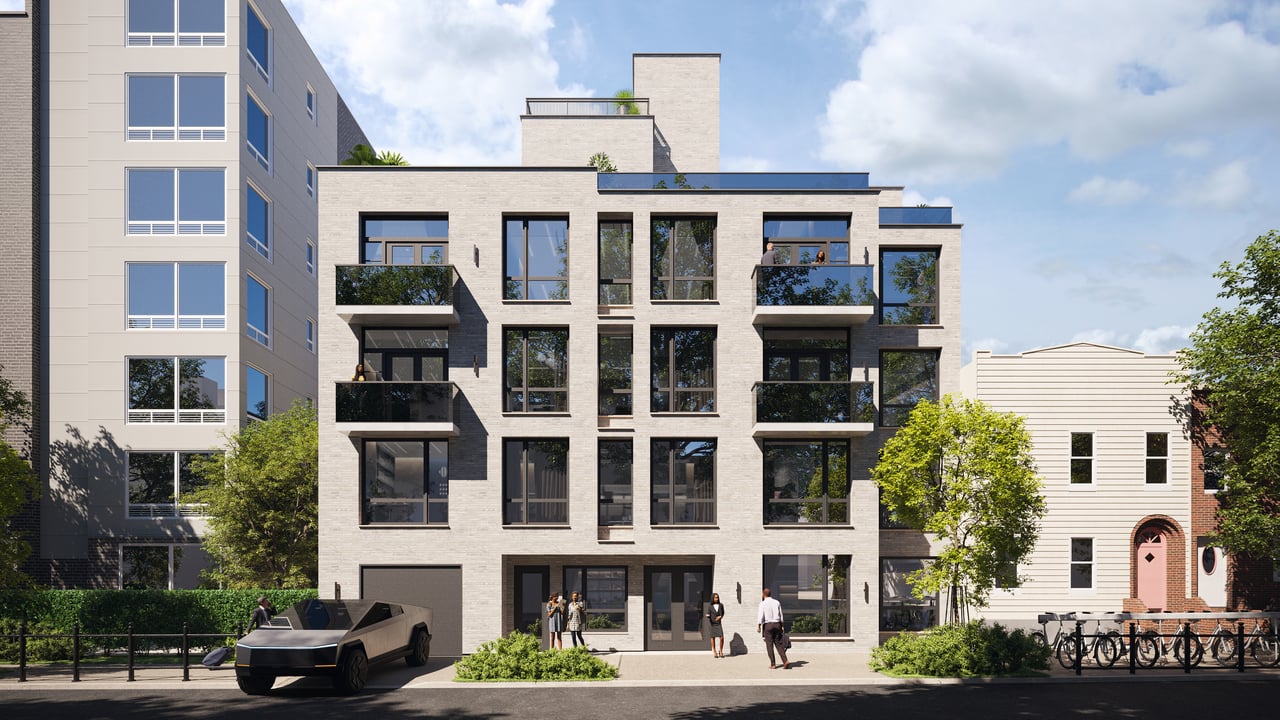
Brooklyn’s new development sector continues to operate in a low-supply environment. Signed contracts declined modestly year over year, but pricing metrics told a different story. The average new development price per square foot increased approximately 5 percent annually, signaling that developers bringing product to market are doing so with discipline—and buyers are responding accordingly.
Notably, new development inventory fell across most submarkets, with fewer large-scale launches entering the pipeline. Smaller boutique projects and later-stage developments accounted for the majority of activity, reinforcing a shift toward absorption rather than expansion.
Luxury new development units, particularly those with outdoor space, waterfront access, or transit adjacency, continued to outperform. Buyers showed increased selectivity, prioritizing quality, layout, and long-term value over speculative pricing.
Long Island City: Stability Through Balance
Long Island City entered 2026 as one of the city’s most balanced condo markets. While total sales volume declined slightly year over year, pricing remained remarkably stable. Median condo prices held within a narrow range, and price per square foot showed only modest fluctuation—an indicator of equilibrium rather than volatility.
Inventory levels in LIC remained healthier than in much of Brooklyn, offering buyers more optionality. However, absorption remained steady, particularly in newer full-service towers with strong amenities and proximity to Midtown Manhattan.
Unlike some overheated cycles of the past, LIC’s current performance reflects a more mature market—one driven by end-users, not speculation. Buyers continue to view the neighborhood as a value alternative to Manhattan, especially for larger floor plans and new construction.
A Market Defined by Selectivity, Not Retreat
Across Brooklyn resale, Brooklyn new development, and Long Island City condos, the throughline is clear: New York City’s outer-borough markets are not retreating—they are recalibrating.
Inventory constraints are reinforcing pricing discipline. Buyers are more analytical, but not absent. Sellers with well-located, thoughtfully designed properties remain well-positioned, while projects lacking differentiation face longer timelines.
As 2026 begins, the market belongs to those who understand nuance—where supply is tight, quality matters, and decisive execution continues to separate outcomes.