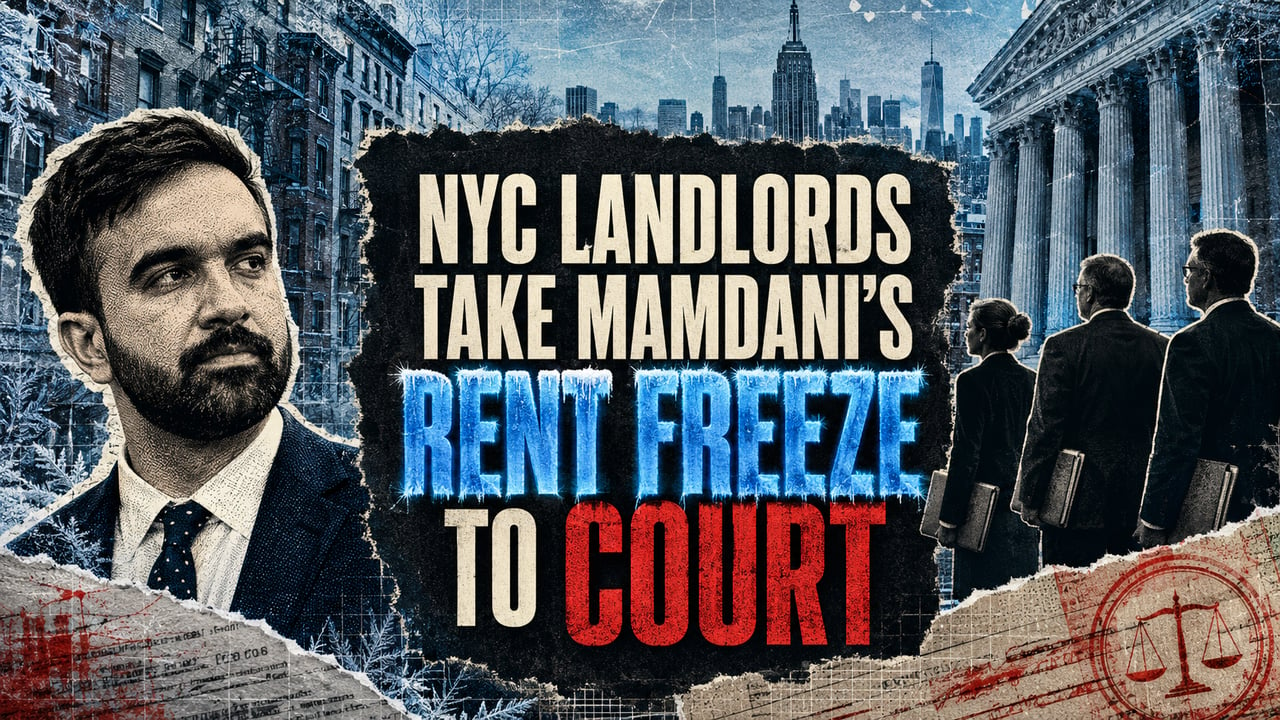
New York City’s rent freeze has moved from political debate to legal action.
A group of landlords has filed a lawsuit seeking to overturn the Rent Guidelines Board’s decision to prohibit increases on both one year and two year renewal leases beginning October 1, 2026.
The Rent Guidelines Board approved the freeze in a 7 to 1 vote on June 25. It applies to leases beginning between October 1, 2026, and September 30, 2027, and affects approximately one million rent stabilized apartments across New York City. It is also the first time the board has frozen increases for two year leases. (The Wall Street Journal)
The lawsuit does not simply argue that a zero percent adjustment is economically damaging.
Its central allegation is that the Rent Guidelines Board failed to operate as an independent administrative body and was improperly influenced by Mayor Zohran Mamdani’s administration.
That claim has not been established by a court.
It is an allegation that will now be tested through litigation.
The distinction matters because the lawsuit could determine more than the permitted rent increase for a single year. It may help define how much influence a mayor can exert over the body responsible for regulating rents across a significant portion of New York City’s housing stock.
What the Rent Freeze Does
The Rent Guidelines Board establishes annual rent adjustments for renewal leases in rent stabilized apartments, lofts, hotels, and certain other regulated properties.
Its latest order sets the permitted increase at zero percent for both one year and two year apartment renewal leases beginning on or after October 1, 2026, and before October 1, 2027. The order does not regulate rents for market rate apartments. (NYC311)
For affected tenants, the immediate result is straightforward.
A tenant renewing a qualifying rent stabilized lease during that period cannot receive the annual increase that would normally be authorized by the board.
The administration has framed the freeze as an affordability measure intended to provide relief to renters facing high housing costs. Mayor Mamdani has also said the city intends to preserve affordable housing, reduce building operating expenses such as insurance, and improve tenants’ understanding of their rights. (Spectrum News NY1)
For owners, the result is more complicated.
Rental income from affected renewals will remain flat during the covered period, even as many property expenses continue to rise.
What the Landlords Are Alleging
According to reporting from The Wall Street Journal, the plaintiffs allege that the Mamdani administration improperly influenced the board through appointments and the presentation of housing cost information.
They argue that the board did not exercise the level of independence required by law and instead carried out a policy outcome promoted by the mayor during his campaign. (The Wall Street Journal)
The(The Wall Street Journal) of the freeze have presented a different account.
Mamdani said after the vote that the decision followed the board’s independent consideration of financial data and public testimony. Supporters argue that tenant affordability is a legitimate part of the board’s analysis and that a rent freeze is within its legal authority. (Gothamist)
Th(Gothamist)political influence, which is common in mayoral appointments, and unlawful interference that prevents an administrative board from exercising independent judgment.
That is the legal line at the center of the case.
The Resignation Before the Vote
The lawsuit also follows the resignation of Christina Smyth, an owner representative on the Rent Guidelines Board, hours before the final vote.
Smyth accused the board of crossing a legal line and argued that the outcome appeared predetermined despite financial data showing rising building expenses. Her resignation left the board with one fewer owner representative during the final decision. (Gothamist)
H(Gothamist)er claim that the process lacked independence, but they do not prove it.
A court will examine the board’s record, its procedures, the evidence considered, and the legal authority governing its decision. Public criticism from a former member may be relevant, but it is not the same as a judicial finding.
The Operating Cost Conflict
The economic dispute behind the lawsuit is easier to understand.
Tenants face an affordability crisis. Owners face rising operating expenses.
The Rent Guidelines Board’s own 2026 data indicated that operating costs for buildings containing rent stabilized apartments increased by 5.3 percent. Insurance costs rose 10.5 percent, while real estate taxes increased 2.6 percent. Administrative expenses also rose. (NYC Rules)
(NYC Rules)irs, utilities, water, fuel, compliance, and financing costs.
Their position is that a building cannot indefinitely absorb expense growth while revenue remains fixed.
Tenant advocates counter that the financial condition of rent stabilized properties varies widely. Some buildings are heavily leveraged or poorly maintained, while others remain profitable. They argue that broad owner claims can obscure significant differences between individual properties and ownership structures. (Shelterforce)
Both points can be (Shelterforce) building in strong condition with conservative debt may withstand a freeze differently from an older property requiring major façade, roof, boiler, plumbing, or elevator work.
That variation will matter throughout the market.
What the Freeze Could Mean for Building Maintenance
The most immediate real estate concern is not necessarily foreclosure.
It is deferred investment.
When income growth is restricted and expenses rise, owners may delay discretionary repairs, renovations, system upgrades, and capital improvements. Essential work still has to be completed, but projects that can be postponed may move further down the schedule.
That could include apartment renovations, hallway improvements, energy upgrades, façade work beyond minimum compliance, elevator modernization, and replacement of aging mechanical systems.
The practical effect may not be visible immediately.
Buildings deteriorate gradually. A single postponed project may appear manageable. Several years of delayed capital spending can materially change the condition and marketability of a property.
Tenants ultimately experience those decisions through service quality, repair response times, common areas, heating systems, and the physical condition of their apartments.
This is why the legal fight cannot be reduced to a simple conflict between tenant relief and landlord profit.
The condition of the housing stock sits between them.
What It Could Mean for Building Values
Rent stabilized buildings are valued largely through their income and expenses.
When expected revenue falls or remains flat while expenses rise, net operating income can decline. Lower net operating income generally reduces the amount an investor is willing to pay, particularly when financing costs remain elevated.
A permanent shift toward more frequent freezes could also change underwriting assumptions.
Investors may apply lower projected rent growth, larger repair reserves, more conservative exit values, or higher required returns. That can place additional downward pressure on sales prices.
Buyers may still pursue stabilized buildings, but the buyer pool could become more specialized. Investors with lower leverage, longer holding periods, operational experience, or confidence in future policy changes may have an advantage.
Owners considering a sale may face a difficult choice.
Accept a lower valuation today, invest additional capital into the property, or wait for greater regulatory clarity.
Brokers marketing these assets will need to explain not only current income but also legal exposure, expense trends, building condition, tenant composition, debt structure, and realistic capital needs.
For more context on the administration’s broader housing agenda, read NYC Wants to Rewrite the Rental Rulebook. Here’s What Mamdani’s 23 Proposals Could Change.
Why Previous Rent Freeze Cases Matter
New York landlords have challenged rent freezes before.
The Rent Stabilization Association sued after freezes adopted during former Mayor Bill de Blasio’s administration, arguing that the Rent Guidelines Board had acted improperly and considered factors outside its authority.
Those earlier challenges were unsuccessful. Courts have generally given the board considerable discretion when it follows the required process and considers the statutory factors before it. (New York Courts)(New York Courts) for the current plaintiffs.
They cannot rely only on the argument that a freeze is financially harmful or politically popular. They will likely need to demonstrate that this board’s conduct was materially different from earlier cases and that the alleged administration influence compromised the decision making process.
The plaintiffs reportedly believe their arguments differ from those raised in previous litigation. Whether the court agrees remains uncertain. (The Wall Street Journal)
What Happens if the Rent Freeze Is Upheld
If the court rejects the landlords’ claims, the zero percent adjustments would remain in place for qualifying leases beginning October 1.
The decision could also strengthen the board’s discretion and make future challenges more difficult, particularly when plaintiffs allege political influence without clear evidence of procedural violations.
For tenants, an upheld freeze would provide immediate predictability during the covered renewal period.
For owners and investors, it could reinforce expectations that future boards may give greater weight to affordability even when operating costs rise.
That could accelerate changes already occurring in stabilized building underwriting, sales activity, and financing.
What Happens if the Court Overturns It
If the court finds that the board failed to act independently or did not follow the law, several outcomes could follow.
The court could annul the order, require the board to reconsider the guidelines, or direct it to conduct a new process. The exact remedy would depend on the legal findings.
That would create immediate uncertainty for leases beginning October 1.
Owners, tenants, attorneys, and brokers would need guidance on what adjustment applies, how renewal offers should be drafted, and whether a replacement order could operate retroactively.
An overturned freeze would also establish a warning for future administrations.
A mayor may appoint board members and advocate for housing policy, but the board must still create a defensible administrative record and demonstrate independent analysis.
The Practical Impact Across the Market
For tenants, the case determines whether the promised freeze will survive legal review.
For property owners, it tests whether the board can hold revenue flat while documented expenses increase.
For investors, it affects projected income, pricing, financing, renovation strategy, and willingness to acquire stabilized assets.
For buyers considering mixed buildings with both market rate and regulated units, it changes how each portion of the rent roll should be valued.
For brokers, it increases the importance of accurate due diligence. A building’s registered rents, lease dates, expenses, violations, capital needs, and regulatory status can materially affect value.
The lawsuit also arrives as the wider New York market continues to divide by property type, location, condition, and regulatory exposure. Read more in NYC Buyers Are Moving Before the Market Data Catches Up. Here’s What Accepted Offers Show Right Now.
The Bottom Line
The rent freeze is no longer only a campaign promise or a Rent Guidelines Board decision.
It is now a legal test of administrative independence, mayoral influence, tenant affordability, and the economics of operating rent stabilized housing.
The immediate dispute concerns the next rent cycle.
The larger issue is who controls the process in future cycles and what evidence the board must consider when affordability and building economics point in different directions.
Whatever the court decides could influence how rent stabilized buildings are operated, financed, purchased, and valued for years beyond October 2026.
Want to build a sharper real estate business? Explore Lundgren365 Coaching with Nile Lundgren for systems, follow up, positioning, and execution that actually move deals.
Thinking about buying, selling, investing, or making a smarter real estate move? Contact Nile Lundgren and The Lundgren Team to start the conversation.