The mansion tax gets all the press. But there's another tax that every NYC seller pays — often without fully understanding it until they're sitting at the closing table staring at numbers they didn't plan for.
It's called the transfer tax. And in a city like New York, where a 'modest' apartment transacts above $1 million, the numbers get significant fast.
I've sat across from sellers at hundreds of closings. The ones who were surprised by these costs almost always had the same problem: nobody walked them through it clearly upfront. That ends here.

|
The transfer tax is not one tax — it's two. New York State charges its own, and New York City charges its own. Both hit the seller at closing. Know the numbers before you list. |
What Is the NYC Transfer Tax?
The New York City Real Property Transfer Tax (RPTT) is a tax paid by the seller on virtually every real estate transaction in the five boroughs — condos, co-ops, townhouses, and one-to-three-family homes. It's been in effect since 1959 and generates over $1.3 billion in annual revenue for the city.
The rate is tiered by price:
|
Sale Price |
NYC Transfer Tax Rate (RPTT) |
|
Up to $500,000 |
1.00% |
|
Over $500,000 |
1.425% |
In practice, the vast majority of NYC residential transactions close above $500,000 — which means 1.425% is the rate most sellers face. On a $2 million sale, that's $28,500 to the city. Before we've even gotten to the state.
And Then There's the New York State Transfer Tax
On top of the city tax, New York State collects its own transfer tax on every closing:
|
Sale Price |
NYS Transfer Tax Rate |
|
Under $3,000,000 |
0.40% |
|
$3,000,000 and above |
0.65% |
Note that the 0.65% enhanced rate at $3M+ applies only to NYC properties — elsewhere in New York State, it stays at 0.40% regardless of price.
So What's the Total Combined Bite?
When you put both taxes together, here's what sellers actually face:
|
Sale Price |
Combined Rate |
Real Dollar Cost |
|
$750,000 |
1.825% |
$13,688 |
|
$2,000,000 |
1.825% |
$36,500 |
|
$5,000,000 |
1.825% |
$91,250 |
|
$5,000,000+ |
2.075% |
$103,750+ |
These are material costs. On a $3 million sale at the higher combined rate, you're writing a check at closing that exceeds $62,000 — just in transfer taxes — before broker commissions, attorney fees, and flip taxes.
Resale vs. New Development: The Critical Difference
Here's where most people — and many agents — get it wrong. The rules are different depending on whether you're selling a resale property or a new development sponsor unit.
Resale Transactions
In a standard resale, the seller pays both the NYS and NYC transfer tax at closing. This is the custom in New York and is written into virtually every resale contract. The buyer is responsible for the mansion tax (if the price is $1M+), but the transfer tax is the seller's burden.
New Development / Sponsor Sales
In new construction, the default often flips. Most offering plans are written so that the buyer pays the transfer tax on behalf of the sponsor. This practice is especially common in luxury new development — and it means a buyer purchasing a new condo can be on the hook for an additional 1.825% to 2.075% of the purchase price that they would not face in a resale transaction.
|
⚠️ Buyer Alert — New Development Before signing a new development contract, read the offering plan's closing cost section carefully. If you're required to pay the sponsor's transfer taxes, factor that into your true cost comparison against resale properties. On a $3M new development purchase, that's potentially $62,000+ in additional cost that doesn't exist in a resale deal. |
What About the 'Gross Up' Calculation?
In new development transactions where the buyer is contractually paying the seller's transfer tax, there's an additional layer: the 'gross up.' New York City's Department of Finance requires that when a buyer pays the transfer tax as an obligation of the seller, the purchase price is effectively adjusted upward for purposes of calculating how much tax is owed. Your real estate attorney handles this calculation at closing, but it's worth knowing it exists — because it can add a few thousand dollars beyond the straightforward percentage.
Does Transfer Tax Apply to Co-ops?
Yes. Co-op transfers are subject to the same NYC RPTT and NYS transfer tax as condos and houses. The transfer is technically of cooperative shares and a proprietary lease — not real property in the traditional sense — but the tax still applies. The taxable consideration for co-ops includes a proportionate share of the building's underlying mortgage, which can affect the calculation.
This is one reason co-ops carry lower overall closing costs for buyers (no mortgage recording tax, no title insurance), but the transfer tax exposure for sellers is the same.
How This Fits Into Your Net Proceeds
When I'm advising sellers on pricing strategy, I always make sure they understand the full stack of closing costs before we go to market. Transfer taxes are unavoidable — but they can and should be modeled into your net proceeds from day one.
Here's a simplified seller net on a $2.5M transaction:
|
Cost Item |
Approximate Cost |
|
Sale Price |
$2,500,000 |
|
NYC Transfer Tax (1.425%) |
$35,625 |
|
NYS Transfer Tax (0.40%) |
$10,000 |
|
Broker Commission (5–6%) |
$125,000–$150,000 |
|
Attorney Fees |
$3,000–$6,000 |
|
Flip Tax (if applicable) |
Varies by building |
|
Estimated Net Proceeds |
~$2,299,000–$2,327,000 |
This is why the conversation about net proceeds has to happen before the listing goes live — not at the closing table. Sellers who are surprised by these numbers make emotional decisions. Sellers who know the full picture make strategic ones.
|
My job as your broker isn't just to find you a buyer. It's to make sure you understand every dollar leaving the table — and that you've made a deliberate, informed decision before we ever hit the market. |
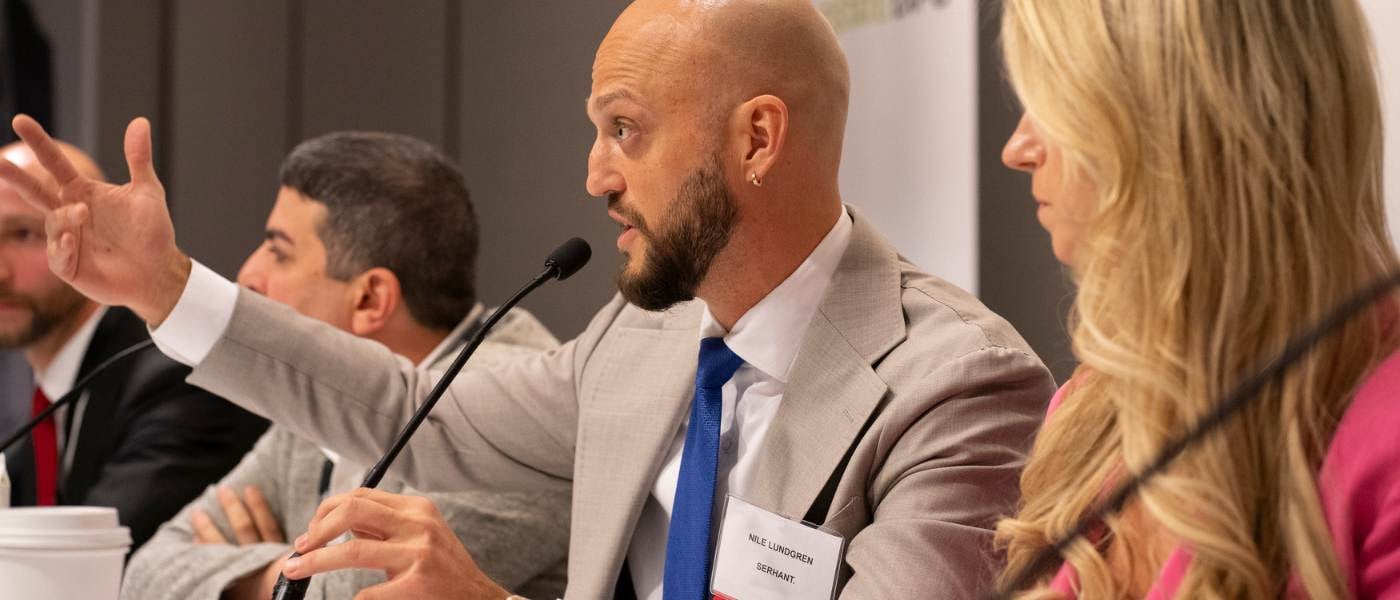
About Nile Lundgren
Nile Lundgren is the founder of The Lundgren Team at SERHANT., with over $500 million in career sales across New York City and South Florida. A cast member on Netflix's Owning Manhattan, Fox News contributor, adjunct professor at Baruch College, and nationally recognized speaker, Nile built his career from the ground up — starting with $200, a basement floor in Brooklyn, and a 300-person call list.
Buying or selling in NYC or South Florida? Connect with Nile and The Lundgren Team.