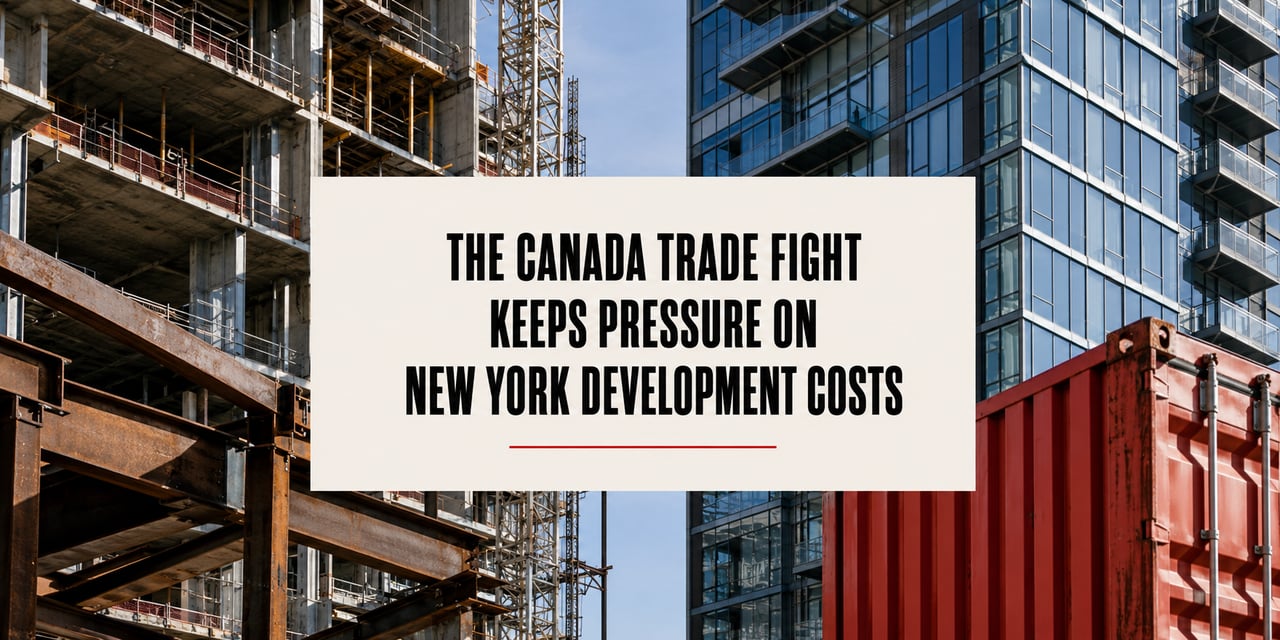
Trade policy rarely stays in Washington. In New York real estate, it shows up in construction bids, contingency budgets, financing terms, and decisions about whether a project moves forward.
President Trump threatened to raise tariffs on Canadian cars, trucks, and automotive parts to 50% beginning January 1, 2027 after trade negotiations with Canada collapsed.
For real estate, the most important detail is not the vehicle tariff. It is the cost relief that failed to materialize for steel and aluminum.
The proposed agreement would have reduced tariffs on Canadian steel and aluminum from 50% to 25%, according to Reuters reporting on the negotiations. With the deal off the table, those existing cost pressures remain.
That does not guarantee higher apartment prices. It does create another obstacle for New York projects already operating on tight margins.
The Real Estate Issue Is Construction Cost
Steel and aluminum sit throughout the development budget. They appear in structural systems, reinforcement, facades, windows, mechanical equipment, electrical systems, and interior components.
A tariff does not translate directly into an identical increase in total project cost. Developers may use domestic materials, negotiate fixed contracts, redesign elements, or find alternative suppliers. The final impact depends on sourcing, timing, contract terms, and the specific materials used.
The risk is still real. Higher import costs can affect market pricing beyond the imported material itself. Domestic suppliers may gain greater pricing power. Contractors may build larger contingencies into bids. Lenders may require more cushion before committing capital.
New York Projects Already Have Limited Room
New York development was difficult before the latest trade escalation.
Land is expensive. Labor is expensive. Financing remains selective. Insurance, regulation, and carrying costs continue to pressure returns.
The National Association of Home Builders reports that construction material costs have increased 46.1% since February 2020, with tariffs adding to the pressure.
Another period of material price uncertainty can force developers to revisit assumptions that once made a project viable.
That may lead to:
- Larger construction contingencies.
- New bids from contractors and suppliers.
- Design revisions intended to control material exposure.
- Higher equity requirements from lenders.
- Delayed construction starts.
- Projects that no longer move forward under the original plan.
None of those outcomes is automatic. Each becomes more likely when the development margin is already thin.
This Does Not Immediately Change Resale Pricing
Buyers and sellers should not treat one tariff announcement as a direct pricing event for existing apartments.
A resale condominium does not become more valuable simply because imported steel is expensive. Mortgage rates do not automatically rise because a trade negotiation failed. The connection is not that immediate.
The longer term effect could develop through supply.
If elevated construction costs cause enough projects to shrink, stall, or disappear, fewer new homes may reach the market. Limited future inventory can support pricing for completed residences, but only when buyer demand remains strong enough to absorb that supply.
That is a possible market effect. It is not a guaranteed outcome.
New Development Buyers Should Watch Delivery Risk
For buyers considering new construction, the relevant question is not whether tariffs will make every apartment more expensive.
The better question is whether the project is adequately capitalized and protected against changing costs.
Buyers and their advisors should pay attention to:
- Construction progress.
- Sponsor experience.
- Expected completion timing.
- Material procurement and contractor commitments.
- Any changes to the offering plan, pricing, or projected delivery.
A strong project does not become weak because of one trade dispute. A project with limited financial room may have less flexibility when costs move against it.
What Developers and Investors Should Monitor
The next phase matters more than the headline.
President Trump’s January 1 tariff increase for Canadian vehicles and auto parts remains a threat, not a completed policy action. Reuters also reported skepticism from industry executives because previous tariff threats were later reduced or delayed.
For real estate, the key indicators are:
- Whether trade negotiations resume.
- Whether steel and aluminum tariffs are reduced, expanded, or modified.
- Changes in material prices reported by the Bureau of Labor Statistics.
- Updated contractor bids and construction contingencies.
- New development starts, delays, and cancellations.
The White House metals tariff framework also includes different treatment for certain products and sources. The effect on an individual project will depend on what is purchased, where it comes from, and when the contract was executed.
The Bottom Line
The Canada trade fight does not prove that New York property prices are about to rise.
It does confirm that construction cost remains a serious risk for new development.
The failed agreement removed the prospect of near term tariff relief for steel and aluminum. For projects already balancing expensive land, labor, and financing, that matters.
The market impact will appear first in development budgets and construction decisions. Any effect on inventory and pricing will take longer and depend on what actually gets built.
About the Lundgren Team
The Lundgren Team at SERHANT., led by Nile Lundgren, specializes in luxury and new development sales across New York City, South Florida, and Connecticut. The team has represented buyers, sellers, and developers in hundreds of transactions totaling more than $500 million in sales.
Thinking about buying, selling, investing, or making a smarter real estate move? Contact Nile Lundgren and the Lundgren Team to start the conversation.
This article is provided for general informational purposes only. It is not financial, legal, investment, or tax advice. Tariff policy may change, and the effect on any real estate project will depend on its contracts, financing, sourcing, and construction plan.