A four-story SoHo compound just hit the market for $72 million.
That sentence alone would have sounded unrealistic ten years ago.
Today, it feels inevitable.
The newly listed residence at 62 Wooster Street is not simply another expensive Manhattan apartment. It represents a larger shift happening across the ultra-luxury market. Buyers at the top end are no longer only chasing height, glass towers, and Central Park views. Increasingly, they are prioritizing privacy, architectural identity, flexibility, and scale.
That is exactly why Downtown Manhattan is becoming a legitimate rival to Billionaires’ Row.
What Is the Most Expensive Apartment in SoHo?
The newly listed compound at 62 Wooster Street is now one of the most expensive residential offerings in SoHo.
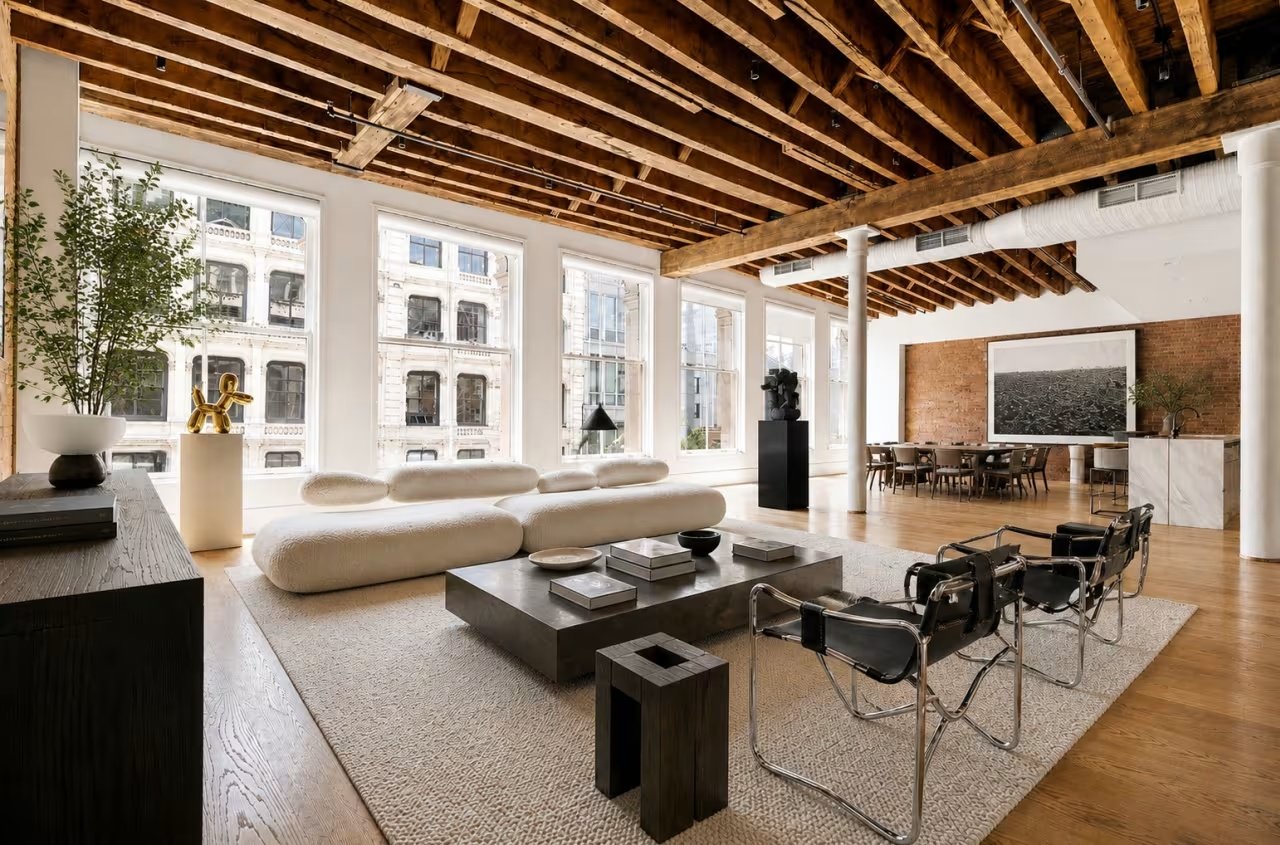
The property combines three separate residences within a historic cast-iron building originally developed by billionaire Jeff Greene. Together, the residences span roughly 18,648 square feet across four floors with 14 bedrooms, private elevator access, terraces, and a rooftop lap pool.
The scale alone is almost impossible to replicate in SoHo today.
That scarcity is what matters.
Downtown Manhattan was never designed around supertall residential towers. The value comes from architectural limitations. Historic loft buildings, cast-iron structures, protected streetscapes, and limited redevelopment opportunities create a market in which true trophy inventory becomes increasingly difficult to assemble.
Why Are Luxury Buyers Moving Downtown in Manhattan?
For years, Uptown and Midtown dominated the conversation around ultra-luxury real estate.
Central Park views.
Tower living.
Full-service skyscrapers.
Global branded developments.
That market still exists and continues performing at a high level. Buildings like One57 helped define an era of vertical luxury in Manhattan.
But the buyer profile is evolving.
Many ultra-high-net-worth buyers now want something less standardized and less visible. They are prioritizing homes that feel personal, architectural, and irreplaceable rather than simply expensive.
Downtown Manhattan offers that.
SoHo, Tribeca, and the West Village provide:
• historic architecture
• larger floor plates
• private elevator access
• loft scale living
• lower-density buildings
• greater privacy
• less transient ownership
The appeal is no longer only location.
It is control.
What Makes a Trophy Property Valuable in NYC?
Scarcity.
That has always been the real answer.
The most valuable properties in Manhattan are not necessarily the ones with the highest finishes or biggest amenities package. The assets that hold long-term relevance are usually the hardest to replicate.
At 62 Wooster Street, the value comes from multiple layers of rarity:
• a historic cast-iron building
• compound style scale
• architectural continuity
• private access
• outdoor space
• Downtown Manhattan location
• limited comparable inventory
Trophy buyers are not only purchasing square footage.
They are purchasing differentiation.
The more difficult a property is to reproduce, the more valuable it becomes over time.
What Is Compound Style Living in New York City?
Compound living is becoming increasingly attractive among wealthy buyers who want flexibility without sacrificing privacy.
In suburban markets, compounds have existed for decades through guest houses, adjacent structures, and estate layouts.
In Manhattan, the concept is evolving differently.
Buyers are now combining adjacent lofts, full floors, duplexes, and penthouses to create large scale private environments inside dense urban neighborhoods.
The 62 Wooster Street property reflects that trend perfectly.
The residences remain technically separate, which gives a future owner flexibility around staffing, guests, family use, offices, wellness space, or long-term generational planning.
That adaptability has become increasingly valuable post 2020.
Ultra luxury buyers are thinking longer term now.
Why Are Buyers Paying More for Privacy in Manhattan?
Because visibility has become exhausting.
The highest-end buyers increasingly want separation from traditional luxury tower living. They want fewer neighbors, fewer shared spaces, and more control over access.
A private keyed elevator inside a seven-unit cast iron building delivers a fundamentally different ownership experience than a 90 story condominium tower.
Neither is inherently better.
They simply attract different psychology.
One buyer wants skyline dominance and hotel infrastructure.
Another wants architectural intimacy and anonymity.
Downtown Manhattan is benefiting heavily from that second category.
Why Are Cast Iron Lofts So Valuable in SoHo?
Because they cannot be recreated authentically.
The proportions are different.
The materials are different.
The layouts are different.
High beamed ceilings, exposed columns, oversized industrial windows, and massive open floor plates create a spatial experience modern construction rarely replicates successfully.
Buyers understand that.
The best SoHo lofts feel connected to New York’s architectural history in a way newer developments often do not.
That emotional identity carries real value in the luxury market.
Especially internationally.
Global buyers are not flying to Manhattan looking for generic product. They are searching for something distinctly New York.
Is Downtown Manhattan Competing With Billionaires’ Row?
Increasingly, yes.
The numbers already support it.
Recent West Village sales approaching and exceeding $60 million are reshaping pricing expectations below 14th Street. The buyer's appetite clearly exists.
But the more important shift is psychological.
Downtown Manhattan is no longer viewed as secondary luxury.
For many buyers, it is now the preferred luxury market.
Especially among:
• founders
• media executives
• tech entrepreneurs
• international creatives
• finance buyers seeking discretion
The appeal is less formal and more architectural.
Less branded.
More individual.
Why Are Ultra Luxury Buyers Choosing Architectural Homes Over Glass Towers?
Because identity matters more now.
For years, luxury development prioritized sameness:
• glass curtain walls
• standardized amenities
• predictable layouts
• interchangeable finishes
That model still works extremely well at scale.
But at the trophy level, buyers increasingly want emotional differentiation.
They want homes that feel impossible to duplicate.
A quadruplex SoHo loft inside an 1860s cast iron building creates a completely different ownership narrative than another apartment high above 57th Street.
The buyer is not only purchasing luxury.
They are purchasing authorship.
How Rare Are Large Scale Lofts in SoHo?
Extremely.
There are very few remaining opportunities to assemble nearly 19,000 square feet of contiguous residential space in prime SoHo.
That matters because scarcity compounds over time.
As inventory tightens and landmark protections remain in place, large scale architectural residences become more difficult to create.
That naturally pushes values higher at the top end of the market.
Especially when global luxury demand returns aggressively to New York.
The Future of Manhattan Trophy Real Estate
The most valuable inventory in Manhattan is changing.
For years, luxury was measured primarily through height, views, and amenities.
Now buyers are placing equal importance on privacy, scale, architecture, and identity.
The rarest product in New York today is no longer simply a penthouse in the sky.
It is irreplaceable architectural real estate with history, flexibility, and scarcity built into the asset itself.
That is exactly why properties like 62 Wooster Street matter.
Not because they are expensive.
Because they are becoming harder to find.
Want to build a sharper real estate business? Explore Lundgren365 Coaching with Nile Lundgren for systems, follow up, positioning, and execution that actually move deals.
Thinking about buying, selling, investing, or making a smarter real estate move? Contact Nile Lundgren and The Lundgren Team to start the conversation.
Looking to buy or sell luxury real estate in New York or Florida? Call Nile Lundgren at (917) 453-4526 — Lundgren Team | SERHANT · nilelundgren.com · $550M career volume.