
I was on a call with one of my agents recently. They were mid-negotiation, feeling their way through it, and I jumped in. Not because they were doing anything wrong — because there was a gear they hadn't shifted into yet. The gear that separates agents who present offers from agents who engineer outcomes.
After the call, they asked me: What were the key things you did that I should learn from?
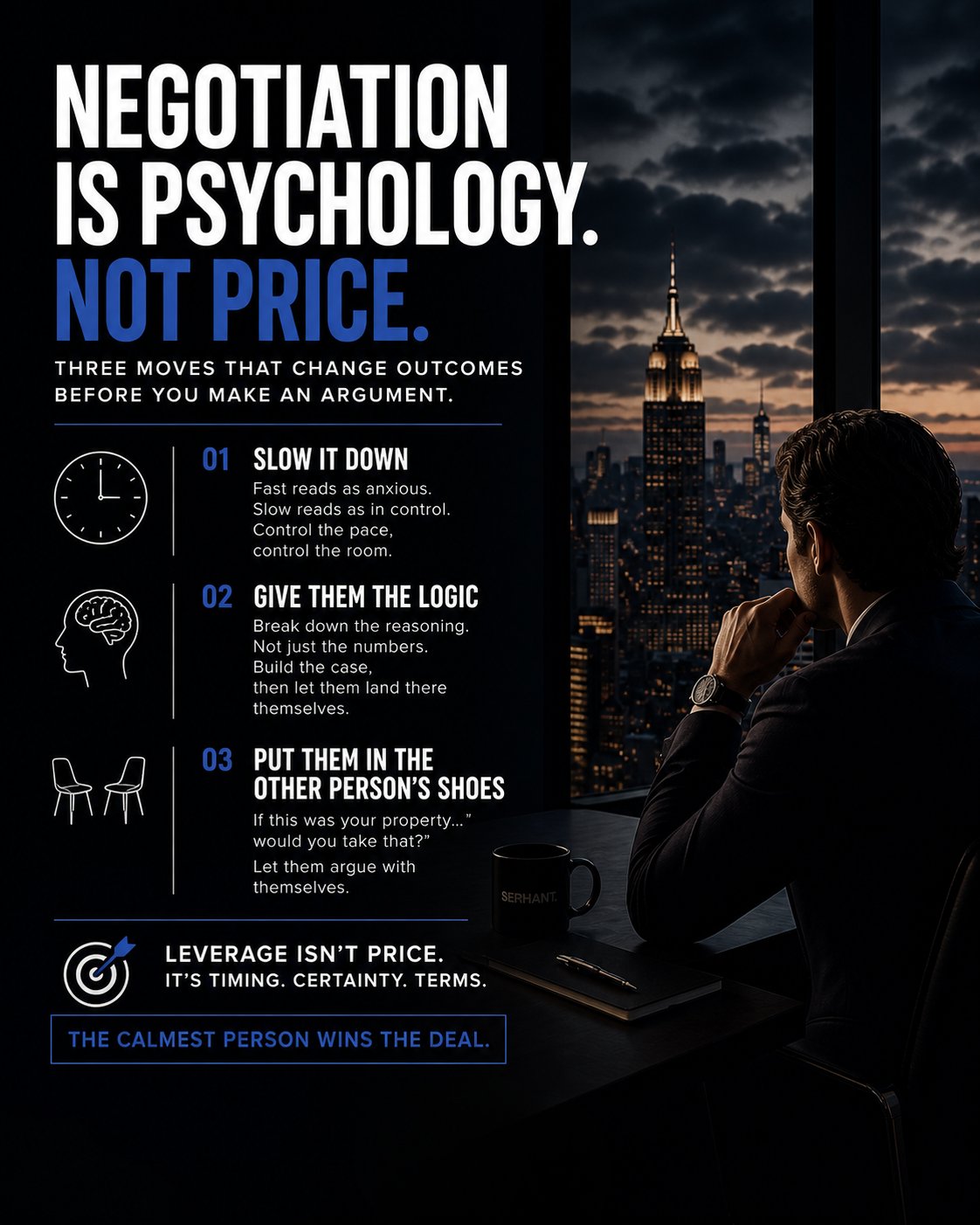
Three things. And they're not tactics. They're a framework — one I use on every deal, at every price point, in every market I work in. Get these right and the negotiation changes before you've made a single argument.
|
You are not just presenting an offer. You are managing the psychology of two people who see the same deal from completely opposite vantage points. Your job is to build the bridge between them. |

Slow It Down
The first thing I did on that call was slow everything down.
Most agents — especially newer ones — feel the pressure of a negotiation and respond by moving faster. Talking faster. Throwing more information. Filling every silence with another point. That energy reads as anxiety to everyone in the room, and anxiety kills deals. When the agent sounds uncertain, the client becomes uncertain, and uncertain clients don't sign anything.
Slowing down is a signal. It says: I've been here before. I know how this ends. There's no emergency. When you control the pace, you control the room. The first thing I do in any high-stakes conversation is deliberately decelerate. Not because I have more time — because pace is a negotiating tool, and fast is rarely the right speed.
|
Slow is smooth. Smooth is confident. Confidently closes deals. |
Give Them the Rationale — Then Let Them Land There Themselves
The second thing: I broke down the reasoning out loud. Not just the numbers — the logic underneath the numbers. Why does this price make sense given the timing? What the seller is thinking. What the buyer's leverage actually is and where it isn't. What the next 60 days look like for both sides if this deal doesn't get done today.
Here's the thing most agents miss: buyers don't just need to understand the offer. They need to understand why the offer is right. When a client genuinely understands the logic — not because you told them, but because you walked them through it until they concluded themselves — they become a participant in the negotiation instead of a passenger in it. That's a completely different energy going into a deal.
Don't just deliver the message. Build the case. Then let them close it.
The Most Important Move: Put Them in the Other Person's Shoes
This is the one. This is the gear most agents never find.
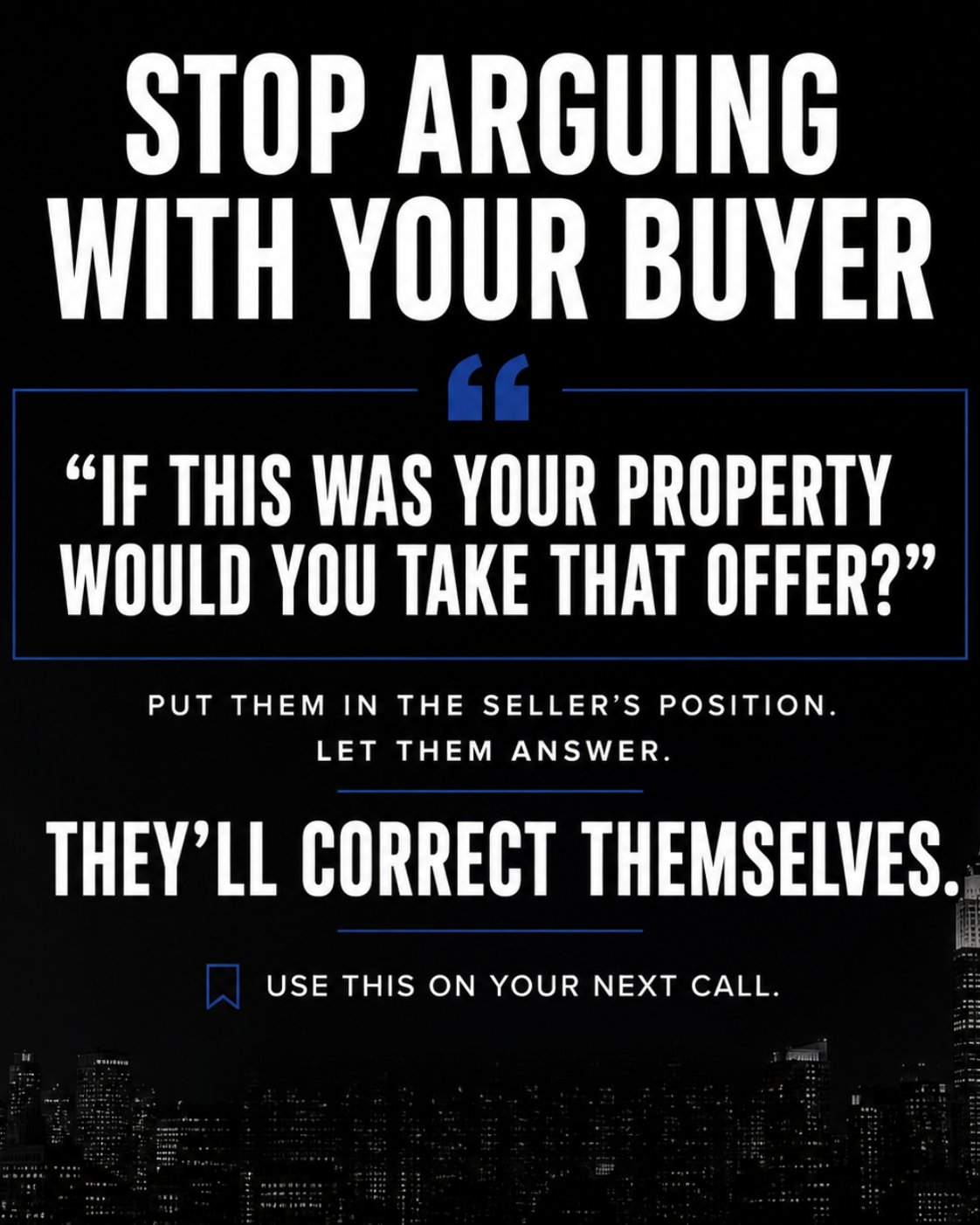
Whenever I'm working with a buyer who's coming in low — and I mean genuinely, unrealistically low — I don't argue with them. I don't tell them they're wrong. I put them in the seller's position and let them argue with themselves.
Here's exactly how it sounds:
|
The Shoe-Swap Script "Let me ask you something. If you had just listed your place — you bought it, you put real money into it, you just brought it to market — and someone came in and said they'd buy it in four months at 40% below your ask..."
"...would you even entertain that? Or would you say: get your ducks in a row and come back when you're serious?"
Then stop. Let them answer. They always answer the same way. |
When they answer — and they always answer the way the seller would answer — they've just made the argument for you. You didn't tell them the offer was unrealistic. They told themselves. That's a different conversation. That's a client who is now thinking like a negotiator instead of a wishful buyer.
The psychology of the seller is not a mystery. They bought the property. They invested in it. They just listed it. They are not, in the first weeks of a listing, looking for a reason to take a massive discount and walk away. They are looking for a buyer who takes them seriously. Your job is to help your buyer understand that — not by lecturing them, but by putting them in the room where the seller is sitting.
|
If your buyer wouldn't accept the deal they're offering, they already know the answer. Ask them the question and let them hear themselves say it. |
What Leverage Actually Means
While we're here — let's talk about leverage. Because most buyers think leverage is about the price. It's not only about the price. Leverage is the full picture: price, timing, contingencies, financing, flexibility, and what it costs the seller to say no.
In the deal we were working through on that call, the buyer was trying to come in dramatically below ask with a long timeline attached — they needed several months before they could even put their own unit on the market. Think about that from the seller's perspective. They just listed. They have momentum. The market is watching. And someone is asking them to take a low number and wait four months while the buyer gets their life in order.
That's not leverage. That's the seller's problem, presented as the buyer's ask.
Real leverage — the kind that actually works — comes from understanding what the seller cares about beyond price. Sometimes it's certainty. Sometimes it's speed. Sometimes it's a specific closing date that lines up with something in their life. Find that, and you have a tool. Come in low with a long contingency and no story about why you're worth waiting for — and you have nothing.
|
What leverage do you actually have? That's the question to ask before you make any offer. Not what do you want — what do you have that the seller actually needs? |
The Agent's Real Job in a Negotiation
I jumped in on that call because my agent was in the deal but not yet above it. They were tracking the conversation — managing the logistics, hitting the right beats — but they weren't yet operating at the level where you can see the whole chessboard while you're playing.
That's not a criticism. That's a stage. Every great negotiator goes through it. You start by learning the moves. Then you learn why the moves work. Then you learn how to read the game before the other side has made their next move. That last level is where deals get engineered — not just managed.
What I did on that call wasn't complicated. I slowed the pace. I made the rationale explicit. I put the buyer in the seller's shoes and let them arrive at the right conclusion themselves. Three things. Done in under ten minutes. And the deal moved forward.
That's the job. Not to be the smartest person on the call. To be the calmest — the one who has been here before, who knows how this ends, who can manage the psychology of both parties toward the outcome everyone actually wants.
|
The best negotiators don't win by being more aggressive. They win by being more clear. Clear on the psychology. Clear on the leverage. Clear on where the deal actually lives — and patient enough to walk both sides there. |
A Note to the Agents on My Team
The pitches are working. The learning is happening. That's the whole thing right there — you're in it, you're growing, you're asking the right questions after the call instead of just moving on to the next one.
Keep me posted on every deal. Keep asking what you can learn from every call, even the ones that close clean. Especially those. The ones that close without drama are the ones where the psychology was managed before it became a problem — and that's the highest level of this craft.
The deals are coming. The skill is building. Stay in it.
About Nile Lundgren
Nile Lundgren is the founder of The Lundgren Team at SERHANT., with over $500 million in career sales. Cast member on Netflix's Owning Manhattan. Fox News contributor. Adjunct professor at Baruch College. Creator of the Jump Cycle framework and founder of Lundgren365 — the coaching platform built for agents ready to stop processing deals and start winning them.
Ready to negotiate at a higher level? Lundgren365 · nilelundgren.com · [email protected]