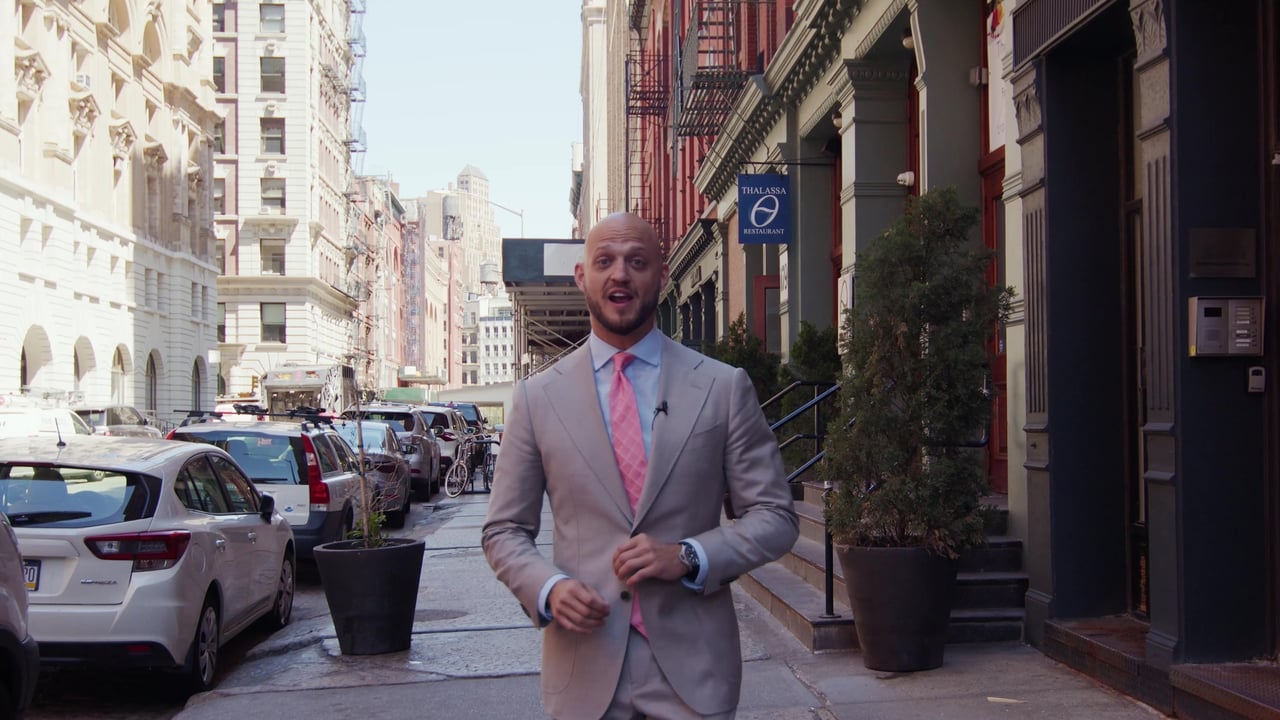
An apartment in Tribeca typically costs several million dollars. Zillow's typical home value for Tribeca was $3,801,299 in September 2026, and PropertyShark ranked Tribeca New York City's second most expensive neighborhood for the second quarter of 2026. Nile Lundgren, founder of the Lundgren Team at SERHANT., is a real estate agent licensed in New York and Florida.
If you are weighing one Tribeca loft or building against another, Nile Lundgren's team at SERHANT. can walk you through the trade-offs before you tour: start a conversation with the Lundgren Team.
There are three dated measures worth knowing, and each answers a slightly different question.
The first is Zillow's. On the Zillow Home Value Index (typical home value), September 2026, Tribeca stood at $3,801,299 (Zillow Research, data as of Sep 30 2026). A year earlier, in September 2025, the same index stood at $3,574,406. That is a gain of 6.3% over twelve months.
Tribeca's primary ZIP codes are 10013 and 10007. Most of the neighborhood is covered by 10013, and the southernmost blocks fall in 10007 (Tribeca, Wikipedia). On the same Zillow index and the same month:
The second measure comes from closed sales across the country. PropertyShark's report Most Expensive U.S. Zip Codes in 2026, released October 13, 2026, ranks ZIP 10013 at #26 nationwide with a 2026 median sale price of $3,850,000, and ZIP 10007 at #32 with a 2026 median sale price of $3,515,000. Those medians cover closed condo, co-op, and one- and two-family sales that closed from January 1 through September 30, 2026. The report notes that 10013 was once a top 10 location and is one of only three New York City ZIP codes in its 2026 top 100.
The third measure is a single quarter. PropertyShark's Top 50 Most Expensive NYC Neighborhoods Q2 2026, released July 22, 2026, places Tribeca at #2 in the city with a $3.68 million median sale price for closed sales from April through June 2026. That median was down 11% from $4.15 million a year earlier, and the number of sales fell 38%. PropertyShark attributes part of that drop to fewer closings at 450 Washington Street and 200 Chambers Street. For scale, the same report puts the Manhattan median sale price for the quarter at a record $1,275,000.
The measures work differently. Zillow's index is a modeled typical value across condos, co-ops and houses in the middle of the market. A median sale price is the middle of whatever happened to close in a given window, so a quarter with fewer closings in a few large buildings can move it. Neither figure is the price of any particular apartment, and individual homes can sit well above or below both.
The monthly carry is the other half of the cost. In a co-op, maintenance covers your share of the building's operating costs, staff, real estate taxes and any underlying mortgage. In a condominium, you pay common charges and your own real estate taxes. Some co-ops also charge a flip tax on resale or cap how much of the price you can finance. Those rules are set building by building, so put your attorney and lender on them early.
Budget from the monthly number, not the asking price. Add the loan payment, the maintenance or common charges and the taxes, then work backward to the price you can carry with comfort. Compare any two lofts on that all-in monthly number, not only on the asking price.
If you own in Tribeca and want to know where your apartment sits against these numbers, request a valuation from the Lundgren Team at SERHANT.
Tribeca is a neighborhood of converted warehouses and lofts on the Hudson River side of Lower Manhattan. Its name is a syllabic abbreviation of "Triangle Below Canal." The triangle, more accurately a quadrilateral, is bounded by Canal Street, West Street, Broadway and Chambers Street (Tribeca, Wikipedia). It is part of Manhattan Community District 1.
Check the address on any listing. By the 2010s, a common marketing tactic was to extend Tribeca's southern boundary to Vesey or Murray Street to make listings more appealing, and the name has been applied as far south as either street (Tribeca, Wikipedia).
The name itself is younger than the buildings. "Tribeca" was coined in the early 1970s and first applied to a narrower area bounded by Broadway and Canal, Lispenard and Church Streets, which looks like a triangle on city planning maps. Artist and resident groups south of Canal were then seeking the same live-work zoning that artists in SoHo had won, and one of them, the Triangle Below Canal Block Association, shortened its name to the Tribeca Block Association (Tribeca, Wikipedia).
The history runs much further back. The land was farmed by Dutch settlers and later became part of a large tract given to Trinity Church by Queen Anne in 1705. In 1807 the church built St. John's Chapel on Varick Street and laid out St. John's Park, and it built a development of brick houses around the park, called Hudson Square, that became the model for Gramercy Park. The area was among the first residential neighborhoods developed beyond the city's colonial boundaries, and it remained primarily residential until the 1840s (Tribeca, Wikipedia).
Commerce came next. The Washington Market, a wholesale produce market that opened in 1813 as "Bear Market," spread into houses and warehouses across the neighborhood. By the mid-19th century the area was the center of the city's dry goods and textile industries, and large numbers of store and loft buildings went up along Broadway in the 1850s and 1860s (Tribeca, Wikipedia).
The 20th century changed the streets. The IRT Broadway-Seventh Avenue Line, today's 1, 2 and 3 trains, opened through the area in 1918. The IRT Ninth Avenue elevated line on Greenwich Street was demolished in 1940. The Holland Tunnel was built from 1920 to 1927, and its entrances and exits sit in the northwest corner of Tribeca, centered on St. John's Park. By the 1960s the industrial base had all but vanished, and the produce market moved to Hunts Point in the Bronx (Tribeca, Wikipedia).
Renewal followed. Independence Plaza rose on Washington Street in 1975, the Borough of Manhattan Community College opened in 1980, and Washington Market Park opened in 1981. Warehouse buildings were converted to residential use, and lofts were used by artists who lived and worked in their spaces, a model pioneered in nearby SoHo. After September 11, 2001, the Tribeca Film Festival was established to help the long-term recovery of Lower Manhattan (Tribeca, Wikipedia).
Open space sits on two sides. Washington Market Park, bounded by Greenwich, Chambers and West Streets, covers 1.61 acres and has community gardens and hosts community events (Washington Market Park, Wikipedia). Along the river, Hudson River Park runs 4.5 miles through Tribeca and the rest of the West Side. Established in 1998, it is the second-largest park in Manhattan after Central Park, at 550 acres including 400 acres of the river itself (Hudson River Park, Wikipedia).
The housing stock shapes the search. Tribeca is dominated by former industrial buildings that have been converted into residential buildings and lofts, similar to those in the neighboring SoHo-Cast Iron Historic District (Tribeca, Wikipedia). During the late 1960s and 1970s, abandoned and inexpensive lofts drew new residents because of the seclusion of lower Manhattan and the vast living space (Tribeca, Wikipedia). Newer construction, such as 56 Leonard Street, completed in 2017, now stands alongside the lofts (56 Leonard Street, Wikipedia).
This site's guide to hiring a Tribeca agent lists the product types side by side: "Converted loft co-ops, full-floor condos, new development along Hudson, and classic cast-iron addresses each underwrite differently. Boards, flip tax, sponsor inventory, and outdoor rights are not optional details." (how to hire a Tribeca luxury real estate agent).
A converted loft co-op comes with a board approval process and the building's own financing rules. A condominium comes with common charges and its own bylaws. Each changes the monthly carry described above, so compare them on that number.
Expect a market with little supply, owners who have few reasons to move, and a need to keep making offers. That is Nile Lundgren's read of the whole Manhattan market, from a message he wrote on October 19, 2026. It is his view, not a statistic about Tribeca.
On supply: "In Manhattan, inventory is scarce."
On why owners stay put: "If they didn't buy cash and they have great rates, why would they sell?"
On the tone of negotiations: "It's wealthy person negotiating against wealthy person."
And on what to do about it: "I feel like the market is softer, but you have to get out there and make a lot of offers."
The practical takeaway: have financing or proof of funds in hand and a clear view of carrying costs before you tour, and plan for more than one offer.
Converted loft and commercial buildings from the 19th and early 20th centuries, one 57-story tower from 2017, and the blocks around the neighborhood's parks.
56 Leonard Street. The 821-foot, 57-story tower on Leonard Street was completed in 2017 and designed by the Swiss firm Herzog & de Meuron, which describes it as "houses stacked in the sky." It is the tallest structure in Tribeca (56 Leonard Street, Wikipedia).
The Textile Building and the Powell Building. The neo-Renaissance Textile Building was designed by Henry J. Hardenbergh and built in 1901. The Powell Building on Hudson Street, a designated landmark, was designed by Carrere and Hastings and built in 1892 (Tribeca, Wikipedia).
Harrison Street and Greenwich Street. The former New York Mercantile Exchange stands at 6 Harrison Street, and 401 Greenwich Street is a historic Tribeca building known as the birthplace of modern bowling (Tribeca, Wikipedia).
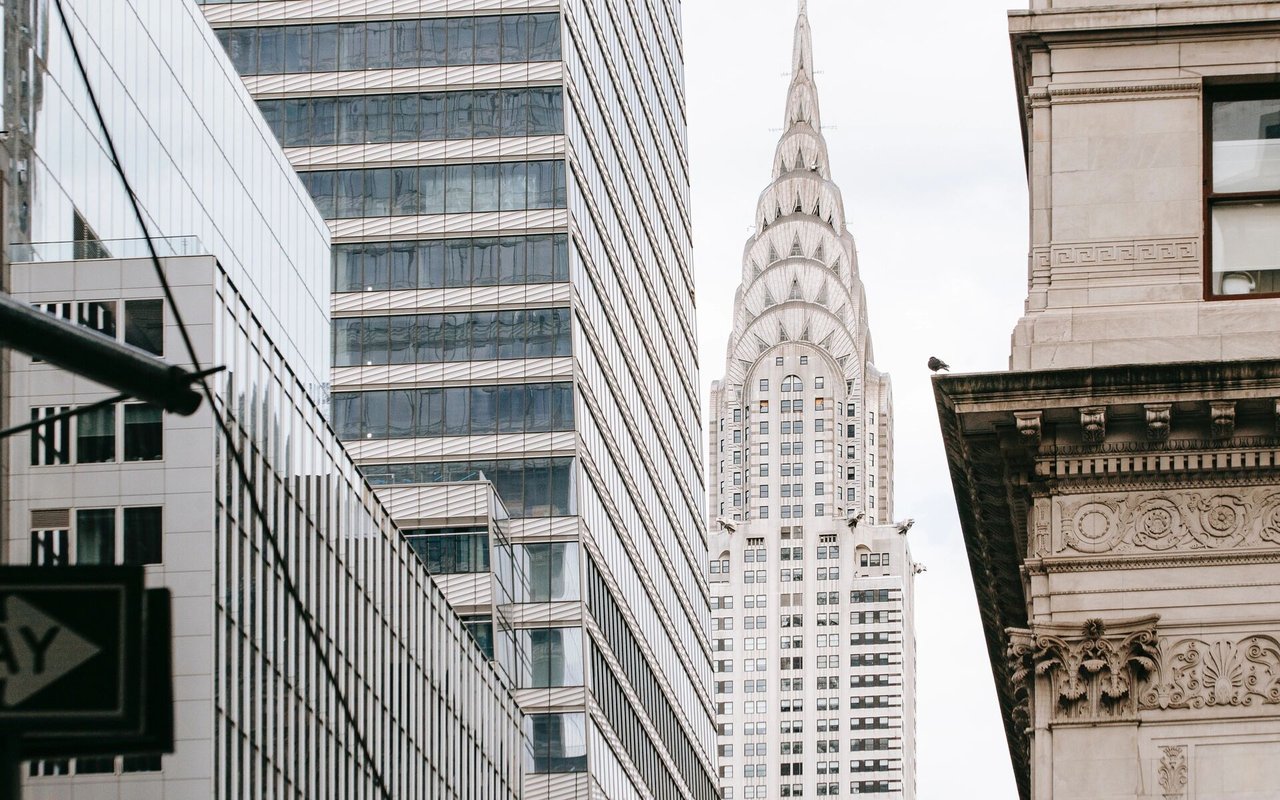
West Street. At the southern edge of the area, the New York Telephone Company building at 140 West Street, between Vesey and Barclay Streets, carries a Mayan-inspired Art Deco motif (Tribeca, Wikipedia).
Washington Street. Independence Plaza, built in 1975, is on Washington Street, near Washington Market Park and its community gardens (Tribeca, Wikipedia).
North Moore Street. Hook and Ladder Company 8, at 14 North Moore Street, is a firehouse still in use (Tribeca, Wikipedia).
St. John's Park and Varick Street. The Holland Tunnel's entrances and exits in the northwest corner of the neighborhood are centered around St. John's Park, which Trinity Church laid out in 1807 beside its St. John's Chapel on Varick Street. In the mid-19th century the park was turned into a freight depot (Tribeca, Wikipedia).
Beach Street and Lispenard Street. Beach Street was created in the late 18th century, and its name is a corruption of the name of Paul Bache, a son-in-law of Anthony Lispenard. Lispenard Street is named for the Lispenard family (Tribeca, Wikipedia).
Is Tribeca expensive?
Yes. Zillow's typical home value for Tribeca was $3,801,299 in September 2026. PropertyShark ranked Tribeca the second most expensive neighborhood in New York City for the second quarter of 2026, with a $3.68 million median sale price.
Which ZIP codes cover Tribeca?
The primary ZIP codes are 10013 and 10007. Most of the neighborhood is in 10013, and the southernmost blocks are in 10007.
What does the name Tribeca mean?
It is a syllabic abbreviation of "Triangle Below Canal." The name was coined in the early 1970s for the area south of Canal Street.
How can you contact Nile Lundgren about Tribeca?
Call (917) 453-4526 or use the contact page on nilelundgren.com. Owners who want a number for their apartment can ask the same team for a valuation.
Nile Lundgren, founder of the Lundgren Team at SERHANT., with $550M in sales.
Licensed in New York and Florida. Cast member of Netflix's Owning Manhattan.
Call (917) 453-4526 or contact the Lundgren Team at SERHANT.
Lundgren Team at SERHANT. on Google Maps
372 West Broadway New York New York 10012 United States
372 West Broadway New York New York 10012 United States